Last updated November 21, 2026
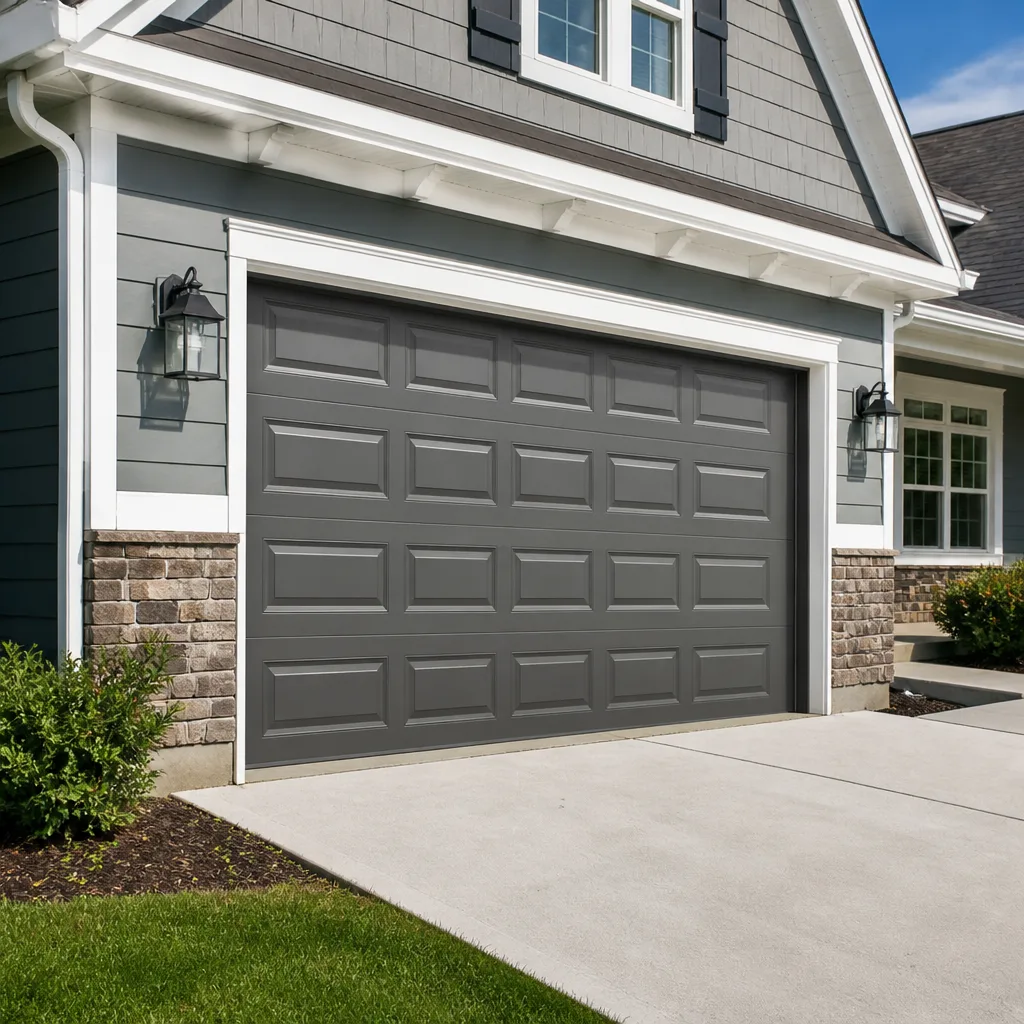 Raised-panel steel
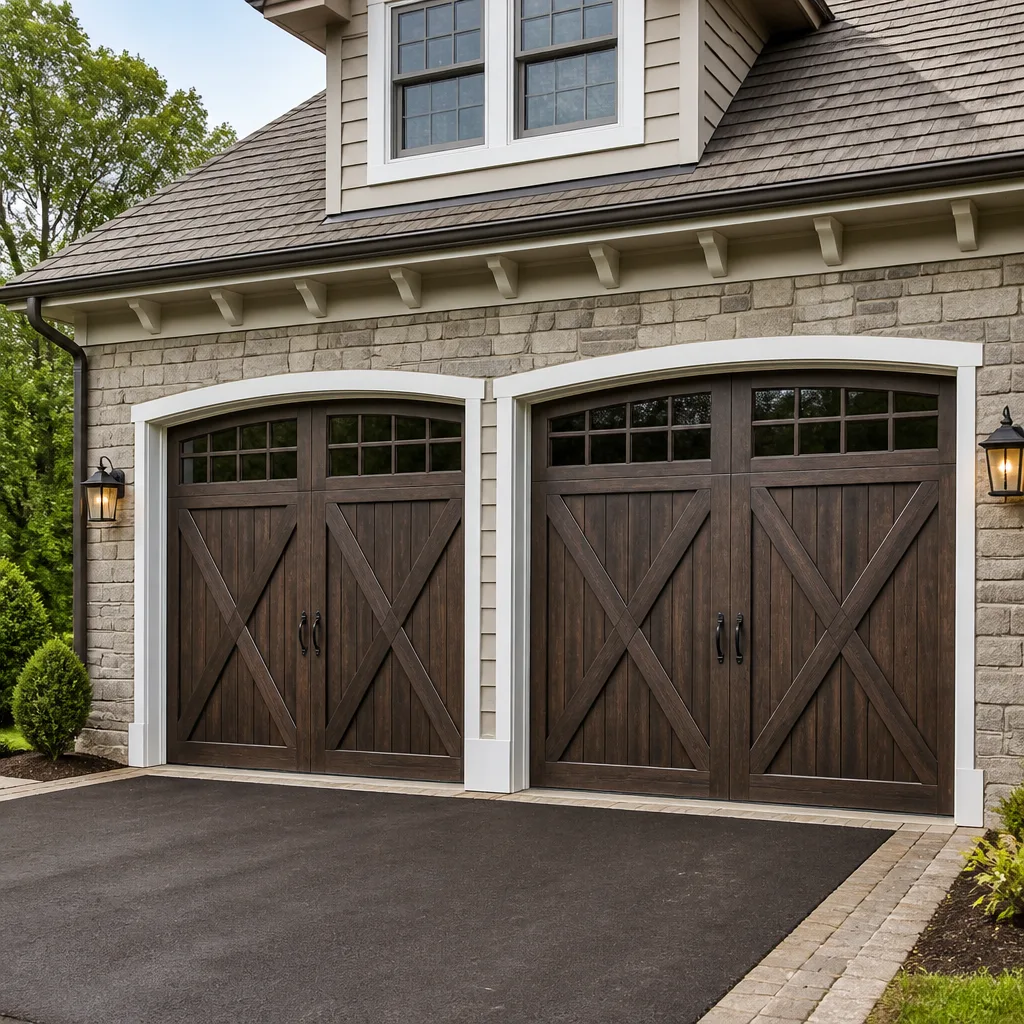 Carriage house
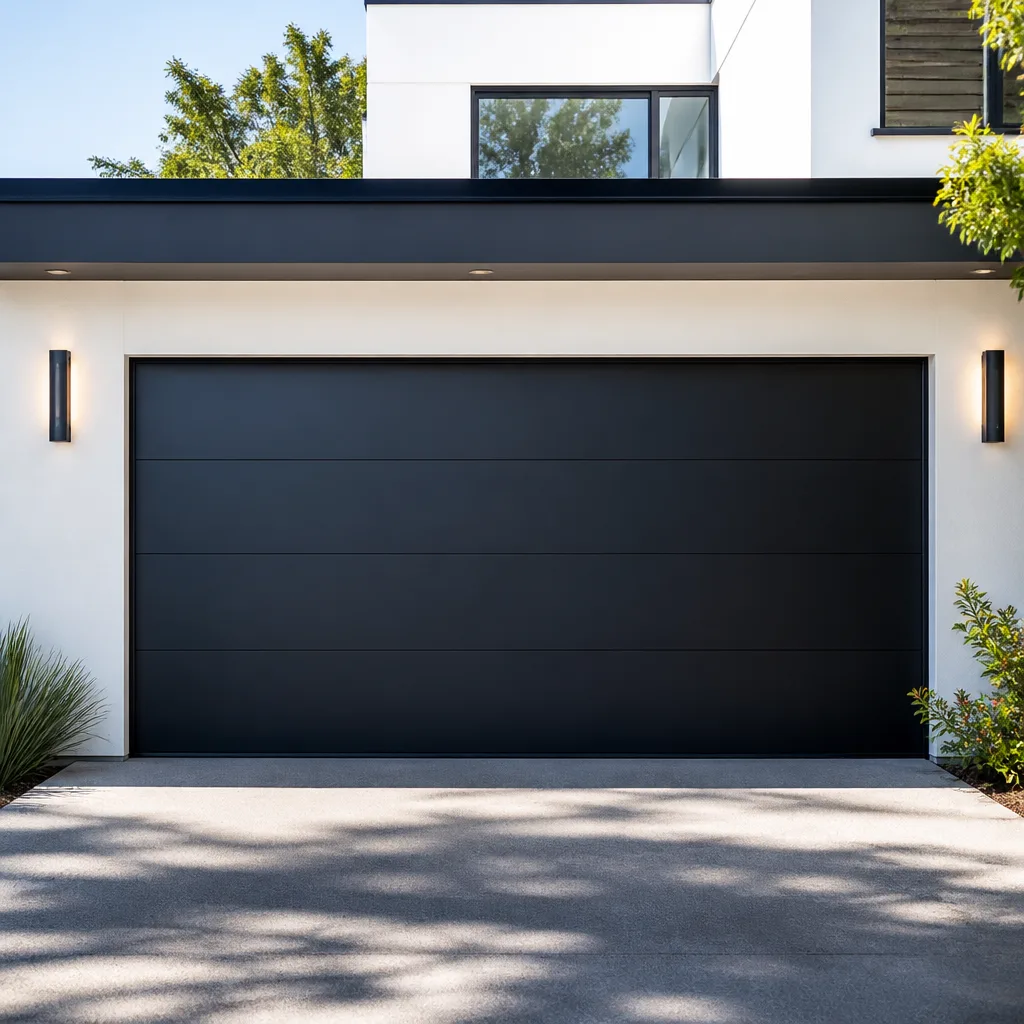 Modern flush
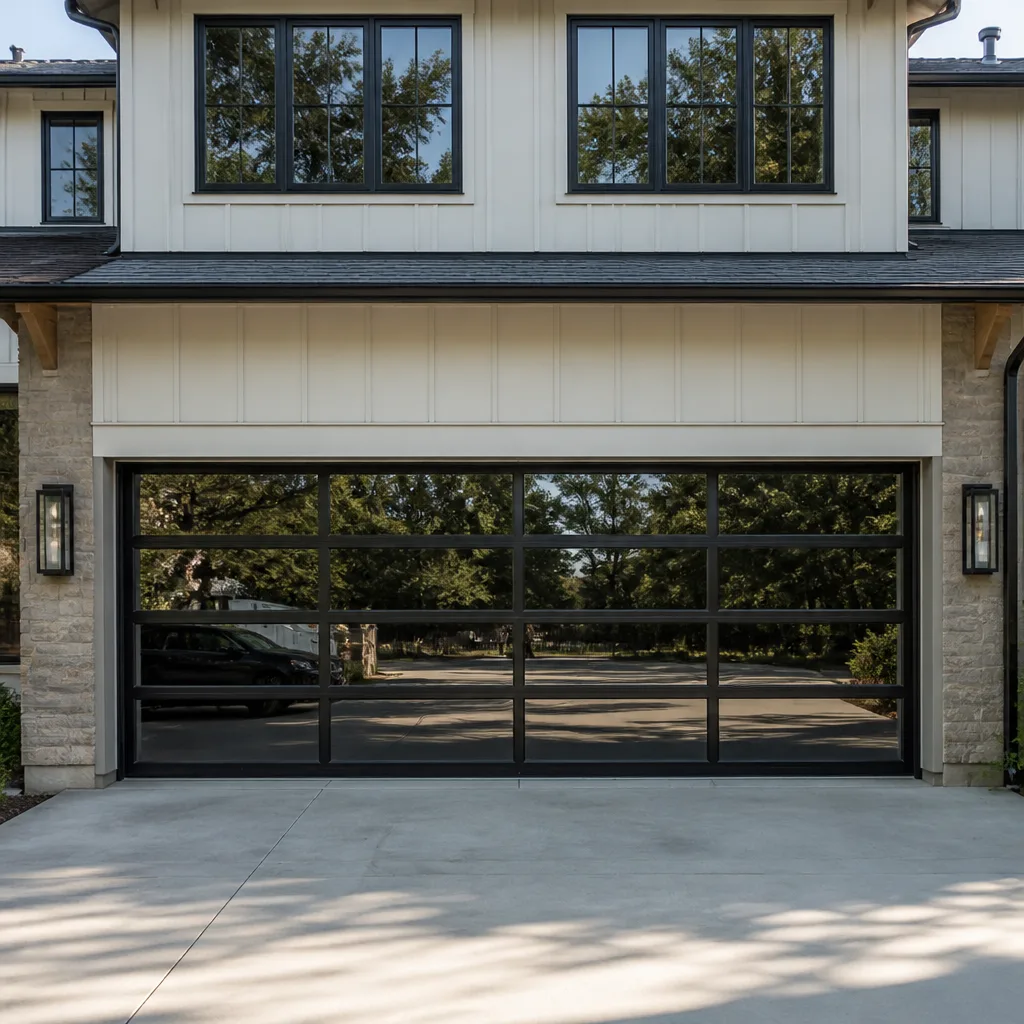 Full-view glass
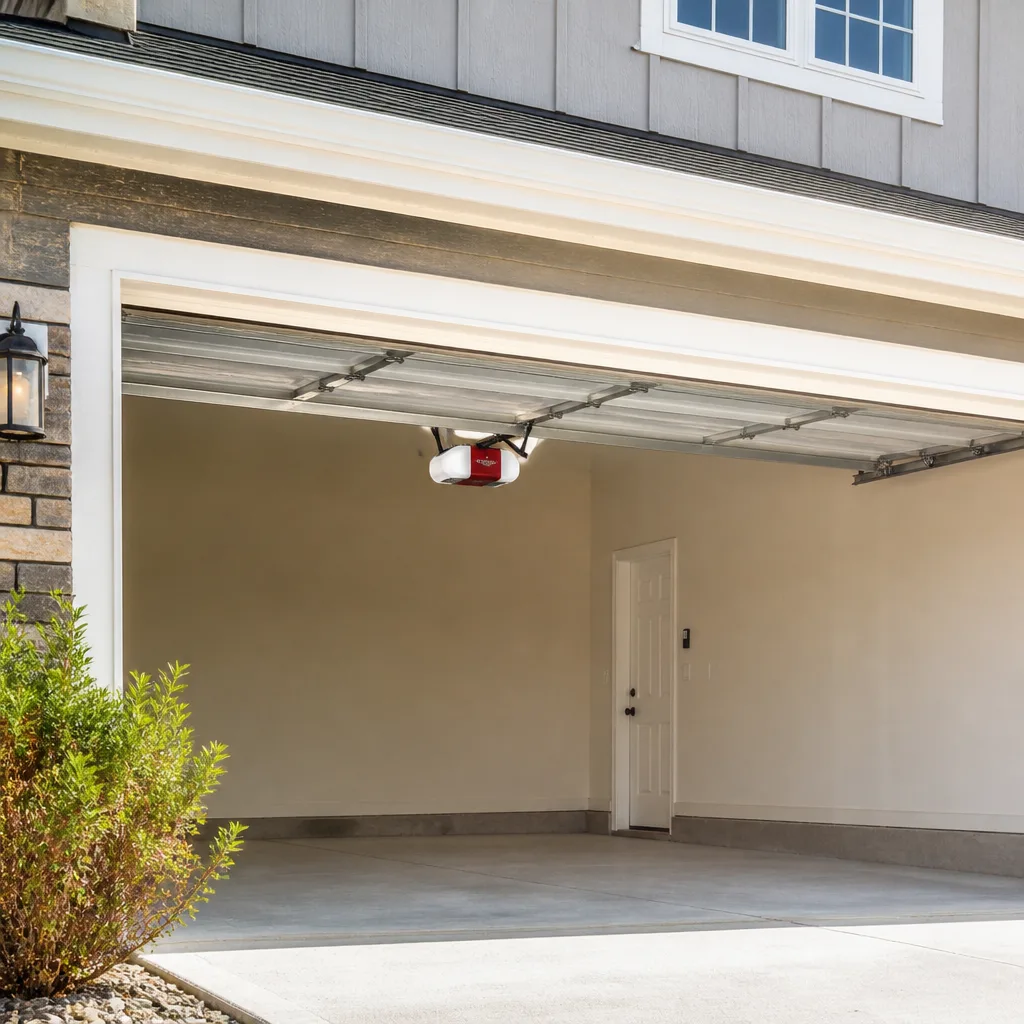 LiftMaster openers
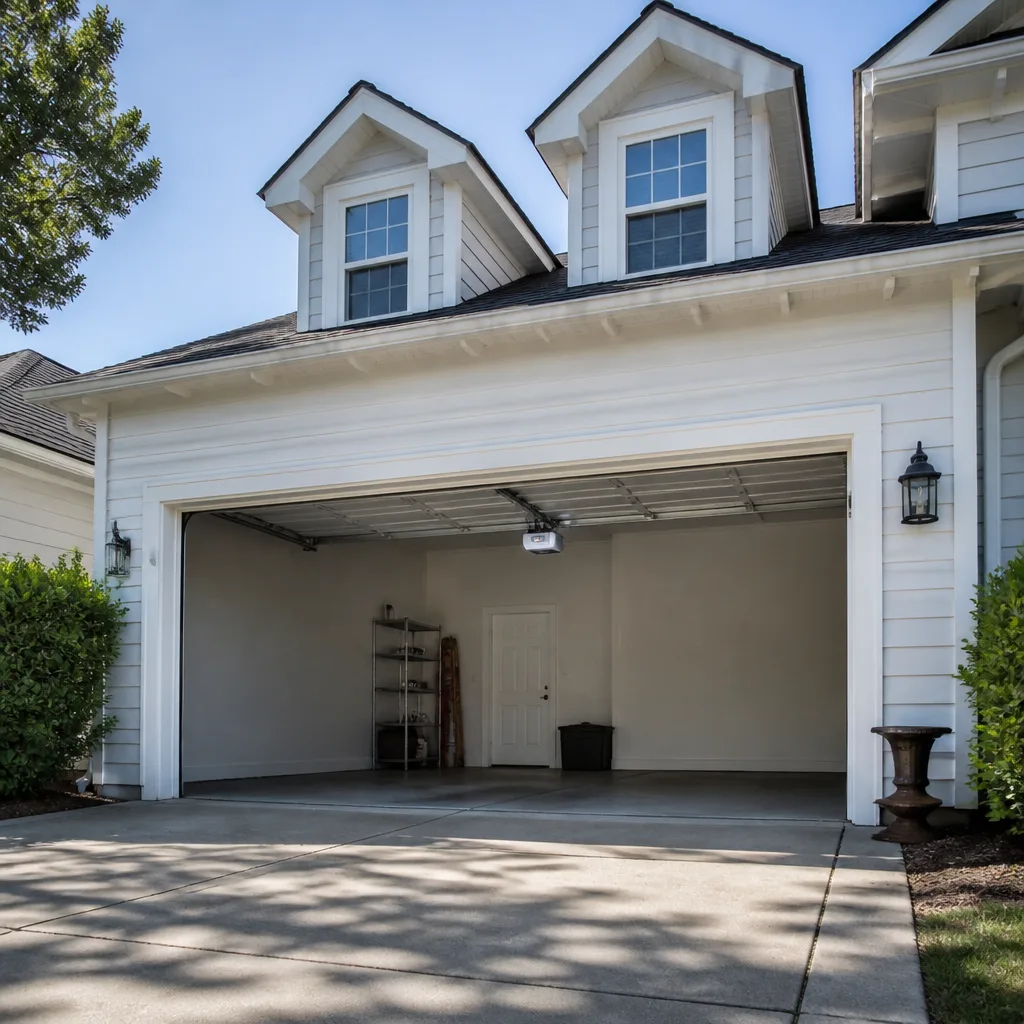 Chamberlain openers
Full 25-point door and opener safety check with every visit - springs, cables, rollers, tracks, and your LiftMaster or Chamberlain opener included
You get a price before we start. It does not change when the pro arrives.
Get your free estimateGarage Door Warning Signs: A Chicago Lawn Homeowner’s Reference Guide
A grinding noise and a scraping noise are not the same warning sign. One usually means your rollers are worn; the other often means your track is bent or something is sitting in its path. Treating them the same way wastes time and money, and it can push a small repair into a full replacement. Most “warning signs” lists stay vague – “unusual noises,” “slow movement” – which tells you nothing about what’s actually failing. This guide fixes that. You’ll get a symptom-to-component map, a clear line between cosmetic wear and structural failure, the signs that mean stop using the door today, and the ones that give you a couple of weeks. We’ll keep it grounded in how doors behave in Chicago Lawn, where alley floors settle and winters are hard on hardware.
Quick Answer
Garage door warning signs fall into three urgency tiers: stop-using-immediately (a snapped spring, a frayed or slack cable, a door that’s come off one track), fix-soon (worn rollers, a struggling opener, a door that reverses on its own), and cosmetic (surface rust, paint wear, minor dings). The single most useful skill is matching the sound or motion to the part it comes from – grinding points to rollers, scraping to the track, a bang to the spring, and an uneven door to the cables. Anything involving springs, cables, or the door leaving its track is a call-a-professional situation, not a weekend project.
Styles & brands we work with
- Raised-panel steel
- Carriage house
- Modern flush
- Full-view glass
- LiftMaster openers
- Chamberlain openers
Table of Contents
- The Symptom-to-Component Map: What Each Warning Sign Actually Means
- Reading the Sounds: Grinding vs. Scraping vs. Banging
- Why an Uneven Door in Chicago Lawn Often Points to a Cable, Not a Spring
- Opener Behavior: Hesitation, Reversal, and Mid-Cycle Stops
- The Three Signs That Mean Stop Using the Door Immediately
- The Signs You Have a Two-Week Window On
- Cosmetic Wear vs. Structural Failure: Telling Them Apart
- A Simple Monthly Check You Can Do Safely
The Symptom-to-Component Map: What Each Warning Sign Actually Means
Here’s the core of this guide. When something feels off with your door, you don’t need a diagnosis – you need to know which component is talking to you. This map covers the signs homeowners describe most often, matched to the part that’s usually responsible and roughly how urgent it is.
- Grinding or rumbling as the door moves: worn steel rollers or dry hinges. Medium urgency – the door still works, but worn rollers put extra load on the opener.
- Scraping or metal-on-metal drag: a bent track, a roller that’s jumped its channel, or debris in the track. Higher urgency if the door shudders as it moves.
- A loud bang from the garage, often followed by the door not opening: a torsion or extension spring has broken. Stop using the door.
- Door rises partway then stops or reverses: a binding track, a failing opener gear, or a misaligned safety sensor. Medium urgency.
- One side of the door sits lower than the other: a stretched or slipping cable, sometimes a worn drum. Treat as urgent, because a cable under tension that lets go is dangerous.
- Door sags or bows in the middle when raised: a fatigued or broken spring, or a bent panel. Stop and get it looked at.
- A visible gap at the bottom or sides when closed: worn bottom seal, or the door has shifted on its tracks. Low to medium, but worth fixing before winter.
- Door won’t stay up when you lift it manually: a spring that’s lost tension. This is a spring problem, and springs are not a DIY job.
That’s the whole idea: a specific symptom points to a specific part. If you can name the symptom, you can usually narrow it to one or two components before anyone touches the door. When you’re ready to have it looked at, a garage door repair visit starts with exactly this kind of inspection.
Reading the Sounds: Grinding vs. Scraping vs. Banging
Sounds are the earliest warning your door gives you, and they’re surprisingly specific. The mistake is lumping them together as “weird noises.” Each one has a usual culprit, and knowing which is which tells you whether you’re looking at routine maintenance or something that needs attention this week.
Grinding is a low, rolling rumble, and it usually comes from the rollers and hinges. Steel rollers wear, their bearings dry out, and the door starts rumbling through its cycle. It’s the most common sound in an older door running on original hardware. Left alone, the extra friction makes your opener work harder, which shortens its life. Our technicians have up to 12 years of experience and hear this one constantly on doors that have never had their rollers swapped.
Scraping is sharper and more metallic – a dragging, catching sound. That’s a track problem: a bend, a roller out of its channel, or something caught in the rail. Run your eye along both tracks (with the door closed and the opener disconnected only if you’re comfortable doing so) and look for dents or debris. A track that’s been knocked out of alignment will scrape until it’s straightened.
Banging or a single loud snap is the one to take seriously. A sharp bang from the garage, often followed by the door refusing to open or dropping, is the classic sound of a broken spring. Don’t try to cycle the door to “see if it still works.” See the stop-now section below.
One more worth knowing: a click-click-click that repeats could be a failing opener gear, and a hum with no movement usually means the opener motor runs but the drive gear or chain/carrier has failed. Both point to opener work rather than the door itself. If that’s your symptom, garage door opener repair is the right next step.
Why an Uneven Door in Chicago Lawn Often Points to a Cable, Not a Spring
A door that’s higher on one side than the other is where a lot of Chicago Lawn homeowners guess wrong. The instinct is to blame the spring, because springs carry the weight. But in this neighborhood, an uneven door more often means a cable problem – and the alley is the reason.
Most Chicago Lawn garages open onto an alley, and alley floors settle and slope over decades. When a garage slab shifts or a driveway grade drops, the door can start to ride unevenly because the opening and the tracks are no longer perfectly square to each other. That slight twist loads one cable harder than the other. Over time, the harder-worked cable stretches, slips on its drum, or frays – and the door hangs low on that side. It looks like a spring issue because the door is sagging, but the cable is the culprit.
Here’s how to tell them apart before anyone arrives:
- Look at the gap. Uneven side-to-side (one edge low, the other high) points to cable or drum. A door that sags evenly across its width, or bows in the middle, points to a spring.
- Check the cables at the bottom corners. With the door closed, look for slack, fraying, or a cable that’s come off its drum. That’s a cable issue – stop and call.
- Watch the door move. If it rises with a wobble or twist, the tracks or cables are pulling unevenly. If it struggles evenly and feels heavy, suspect spring tension.
Alley settling is also why tracks fall out of alignment here. When the slab shifts, a track that was straight can go slightly out of plumb, and the door binds. A trained eye can tell the difference between a track knocked askew by a bump and one that’s following a settled floor. For a door that’s out of square, Garage Door Repair Chicago Lawn can check the tracks and cables together, since the two problems often show up at the same time.
Opener Behavior: Hesitation, Reversal, and Mid-Cycle Stops
Your opener is a messenger as much as a machine. When it hesitates, reverses, or stops halfway, it’s usually reporting a problem elsewhere on the door – or a fault of its own. Learning to read those behaviors saves you from replacing an opener that’s actually fine, or ignoring one that isn’t.
- Hesitation at the start or a labored lift: the door is heavier than it should be. Worn rollers, a dry track, or a weakening spring make the opener strain. The opener isn’t necessarily the problem – it’s compensating for one.
- Reversing right after it starts down: the safety sensors are misaligned or blocked, or the down-limit needs adjustment. Check that the sensors face each other and the path is clear. If it still reverses, it’s a sensor or logic-board issue.
- Stopping mid-cycle: the opener’s travel limits are off, the drive gear is failing, or the door is binding and hitting too much resistance. A door that jams will trigger the opener’s safety stop.
- Remote or keypad works intermittently: usually a battery, a signal issue, or a logic board on its way out. Modern LiftMaster and Chamberlain/myQ units and older Craftsman openers each have their own quirks, which is why we work on all of them.
- Opener runs but door doesn’t move: a stripped gear, a broken chain or belt, or a disconnected carriage. The motor is fine – the drive isn’t.
One useful rule: if the door is hard to lift by hand (with the opener released and the door closed), the problem is with the door, not the opener. If the door lifts and lowers easily by hand but the opener misbehaves, the opener is the likely cause. That single test points you in the right direction before you spend anything.
The Three Signs That Mean Stop Using the Door Immediately
Some warning signs give you time. Three don’t. These are the situations where continuing to run the door risks injury or makes a repair much bigger, and the safest move is to stop and call.
- A broken spring. You’ll usually hear a bang, and the door will feel extremely heavy or won’t lift. A torsion or extension spring under full tension is the most dangerous component on the entire door. Never try to lift the door manually, never attempt to unwind or replace a spring yourself, and never let anyone untrained near it. This is the highest-risk job in garage door service, and it’s the one we treat as a specialty rather than an afterthought.
- A frayed, slack, or snapped cable. Cables carry enormous tension, and one that’s failing can whip loose. If you see a cable hanging free or frayed at the bottom corner, keep the door down and call. Do not prop the door open.
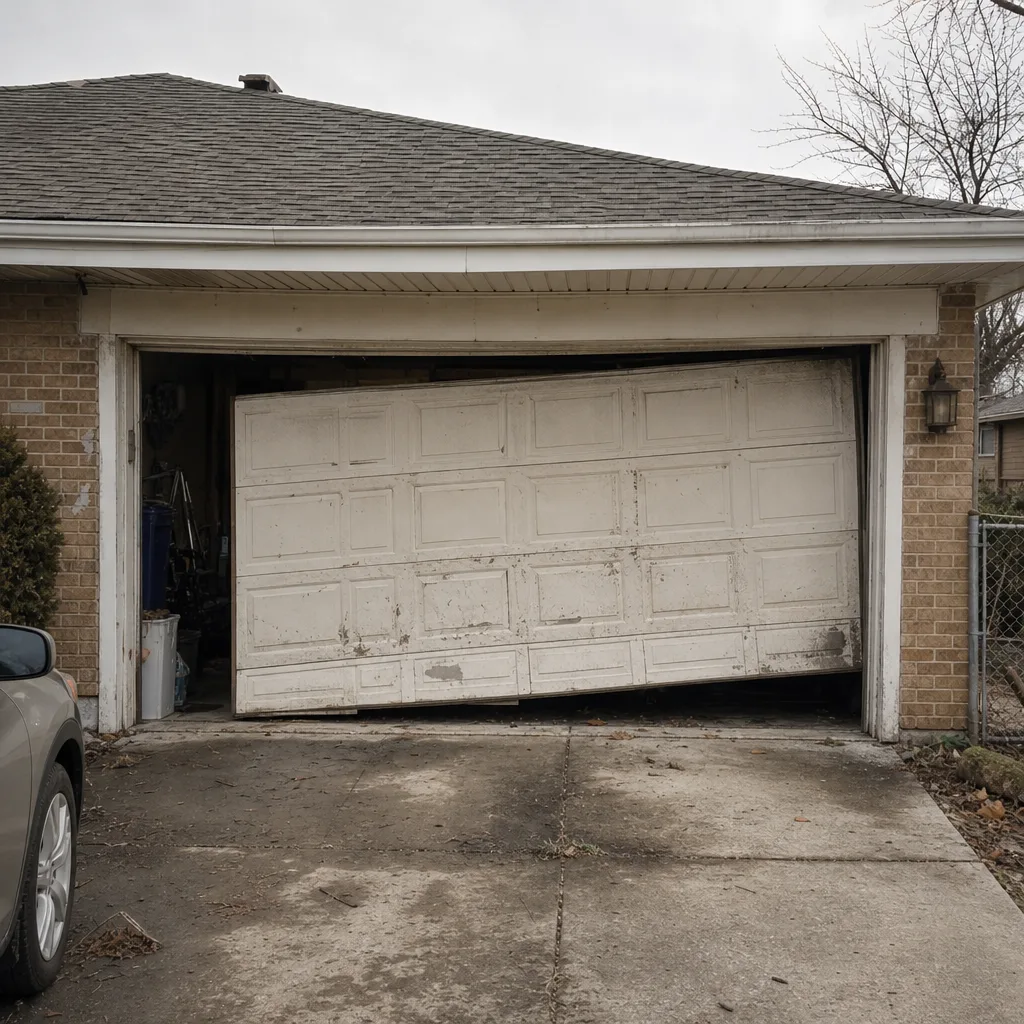
- A door that’s off its track or visibly crooked in the opening. A door that’s jumped the track can fall. If it’s hanging wrong, leaning, or one side is clearly off the rail, stop cycling it. Get it looked at before anyone walks under it.
In all three cases, the door stays closed and you call. That’s not over-caution – it’s the standard advice across the trade, and it’s what protects you and your family. A trained technician has the tools and the technique to bring the door back to a safe state, and doing it right the first time is cheaper than a botched DIY repair that turns one broken part into three.
The Signs You Have a Two-Week Window On
Not every warning sign is a today problem. Plenty of issues are genuinely fine for a couple of weeks while you get them scheduled – they just shouldn’t wait all season. Here’s what falls into that category.
- Worn or noisy rollers. Grinding that hasn’t turned into a binding or shuddering door can wait a short while. It’ll get worse with use, and the friction wears your opener, so don’t sit on it for months.
- A struggling or hesitating opener. If the door still opens and closes reliably, you’re not in an emergency. But an opener that’s straining is a sign the whole system needs a look, and a failing gear only gets worse.
- A door that reverses occasionally. If it’s intermittent, check the sensors and the path first. If it still reverses after that, schedule it – you don’t want it deciding to reverse at the worst moment.
- A worn bottom seal. A gap at the floor lets in cold, dirt, and pests. Not urgent, but in a Chicago Lawn winter you’ll notice the draft and the higher heating bill.
- Minor track bends that don’t affect travel. A slight dent that doesn’t scrape or bind can be straightened on a routine visit rather than as an emergency.
The smart move with these is to book one appointment and let a technician look at the whole door, not just the symptom you noticed. A worn roller, a dry hinge, and a slightly loose track usually travel together, and handling them in one visit is more efficient than three separate calls. That’s part of why we keep parts for the major brands on hand – so a repair that would otherwise mean an order-and-wait becomes a same-visit fix.
Cosmetic Wear vs. Structural Failure: Telling Them Apart
Homeowners tend to overreact to surface problems and underreact to structural ones. A little rust on a hinge isn’t a crisis; a hairline crack in a panel near a stress point might be. Here’s how to separate the two, so you don’t pay for a repair you don’t need or skip one you do.
Cosmetic – usually fine to watch:
- Surface rust on hinges, rollers, or the bottom of the door. Wire-brush and lubricate; it’s maintenance, not failure.
- Paint fading, scuffs, small dings from a bumper or a bike.
- A slightly worn bottom seal or weatherstrip.
- Loose hinges or bolts (tighten them; the door isn’t failing).
Structural – get it checked:
- Cracks or splits in a wood or steel panel, especially near where the door attaches to the opener arm or track.
- A door that’s visibly bent, bowed, or out of square.
- Tracks that are separated from the framing, or mounting hardware pulling loose.
- A gap that opens and closes as the door operates – that’s movement, not wear.
For older doors running brands like Wayne Dalton or Raynor, some cosmetic wear is normal and cosmetic rust is expected. What you don’t want to ignore on any door is a change in the door’s shape or its relationship to the opening. Surface problems sit on the door. Structural problems change how it lines up. If the door’s geometry looks different than it did a year ago, that’s the sign worth acting on.
A Simple Monthly Check You Can Do Safely
You don’t need tools or a ladder to catch most of these warning signs early. A five-minute check once a month catches the small stuff before it becomes the stop-now stuff. Here’s a safe routine – no spring or cable work, nothing that puts your hands near a tensioned part.
- Listen as it cycles. Open and close the door once and listen for grinding, scraping, or banging. Note anything new.
- Watch it travel. Stand back and watch both sides. Does it move smoothly, stay level, and seat onto the floor without one side lagging?
- Look at the tracks and cables from a distance. Check for bends, debris, and cables that look frayed or slack at the bottom corners. Don’t touch them.
- Test the safety reverse. Put a small object like a roll of tape in the door’s path and confirm it stops and reverses. This is the one safety check every homeowner should know how to do.
- Lubricate hinges and rollers with a proper garage door lubricant – not a spring or cable, and never without checking with a technician first if you’re unsure.
- Look at the seal. Run a hand (door closed) along the bottom edge to feel for gaps or daylight.
That’s it. None of this gets you near a tensioned spring, and all of it helps you describe the problem clearly when you call. When the door needs a full look, or the panels are aging out and it’s time to talk replacement, a garage door installation estimate starts with measuring the opening and the existing hardware so the new door fits the first time.
Common Mistakes to Avoid
- Lumping every noise together. Grinding, scraping, and banging point to different parts. Diagnosing them as one “weird noise” sends you down the wrong repair path.
- Trying to lift or prop a door with a broken spring. It’s extremely heavy and can come down unexpectedly. This is the one mistake that can cause serious injury – leave spring and cable work to a trained technician.
- Replacing the opener when the door is the problem. A new opener on a binding door will fail the same way. Fix the door first; test it by hand before blaming the motor.
- Ignoring an uneven door because “it still opens.” In Chicago Lawn, unevenness often signals a cable issue made worse by settled alley floors. It rarely fixes itself, and a failing cable is a safety problem.
- Greasing the springs or cables. Lubricant belongs on hinges, rollers, and tracks – not on tensioned parts where it can attract grit or hide wear.
- Waiting until winter to fix a bottom seal. A gap at the floor lets cold air and pests in, and Chicago Lawn winters make it obvious. Handle it before the cold arrives, not after.
- Assuming rust on a Wayne Dalton or Raynor door means replacement. Surface rust is routine. A door with cosmetic wear and solid structure often just needs a tune-up, not a new door.
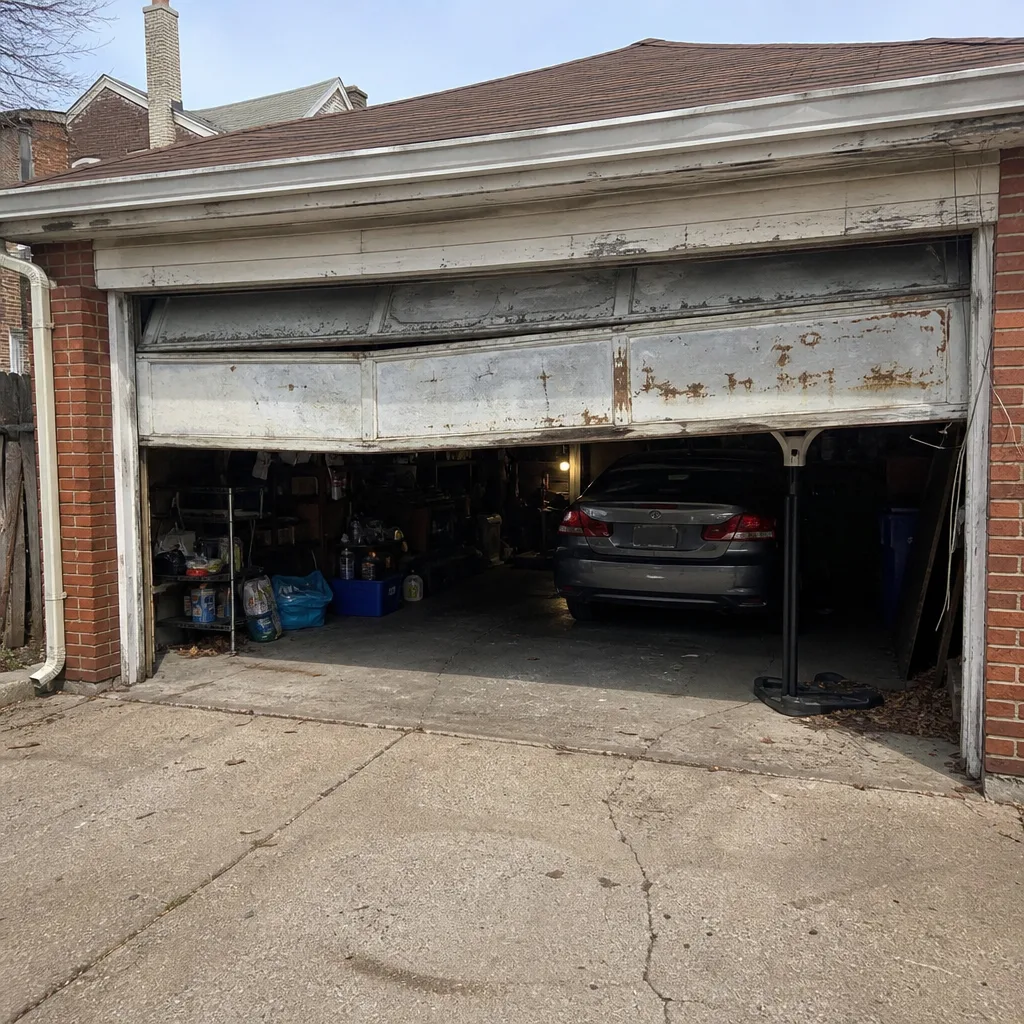
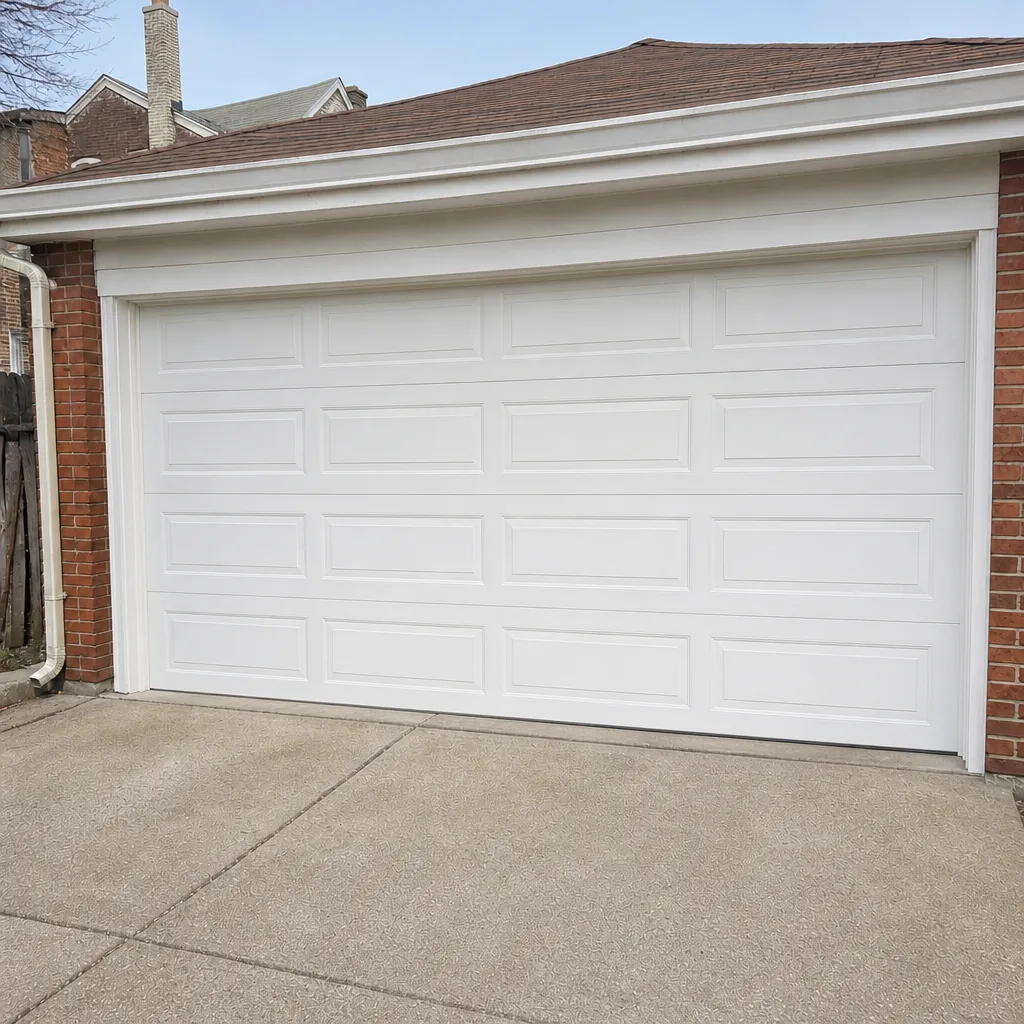
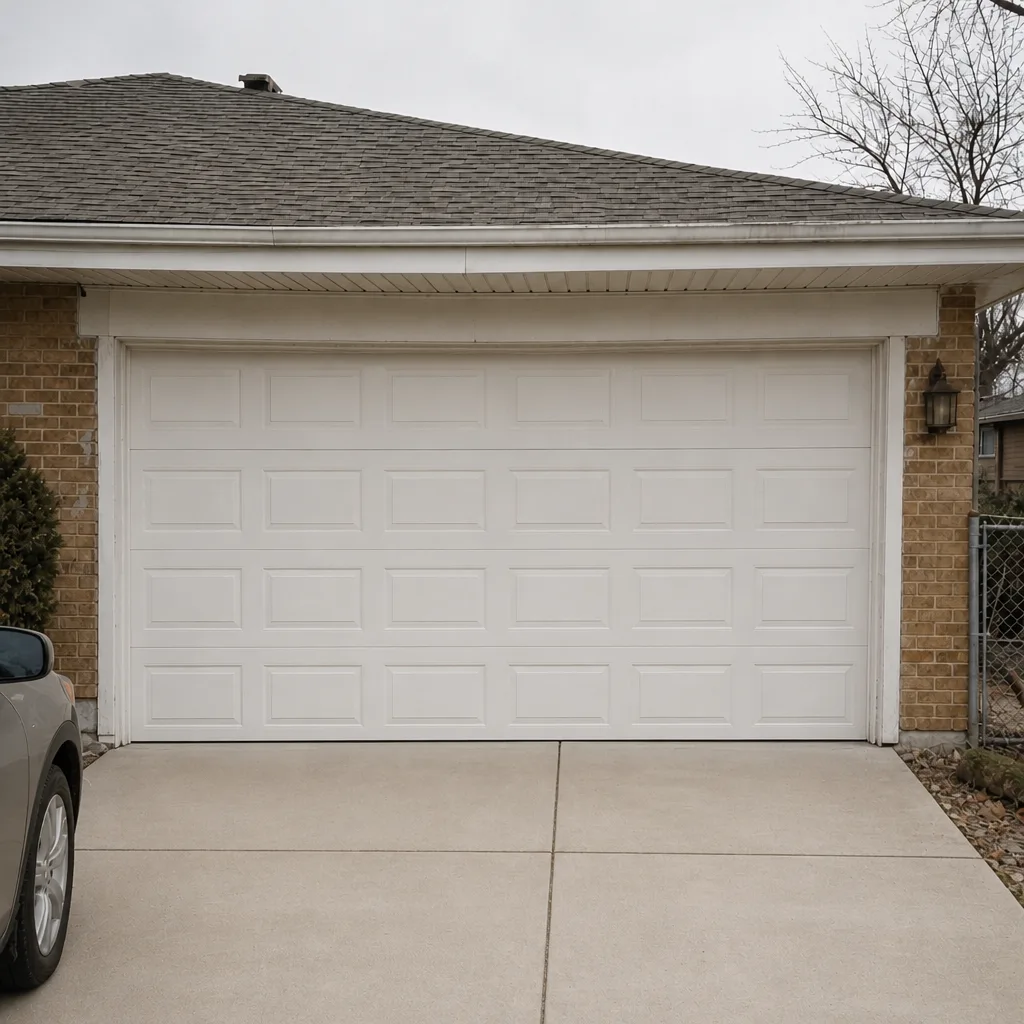
See the difference
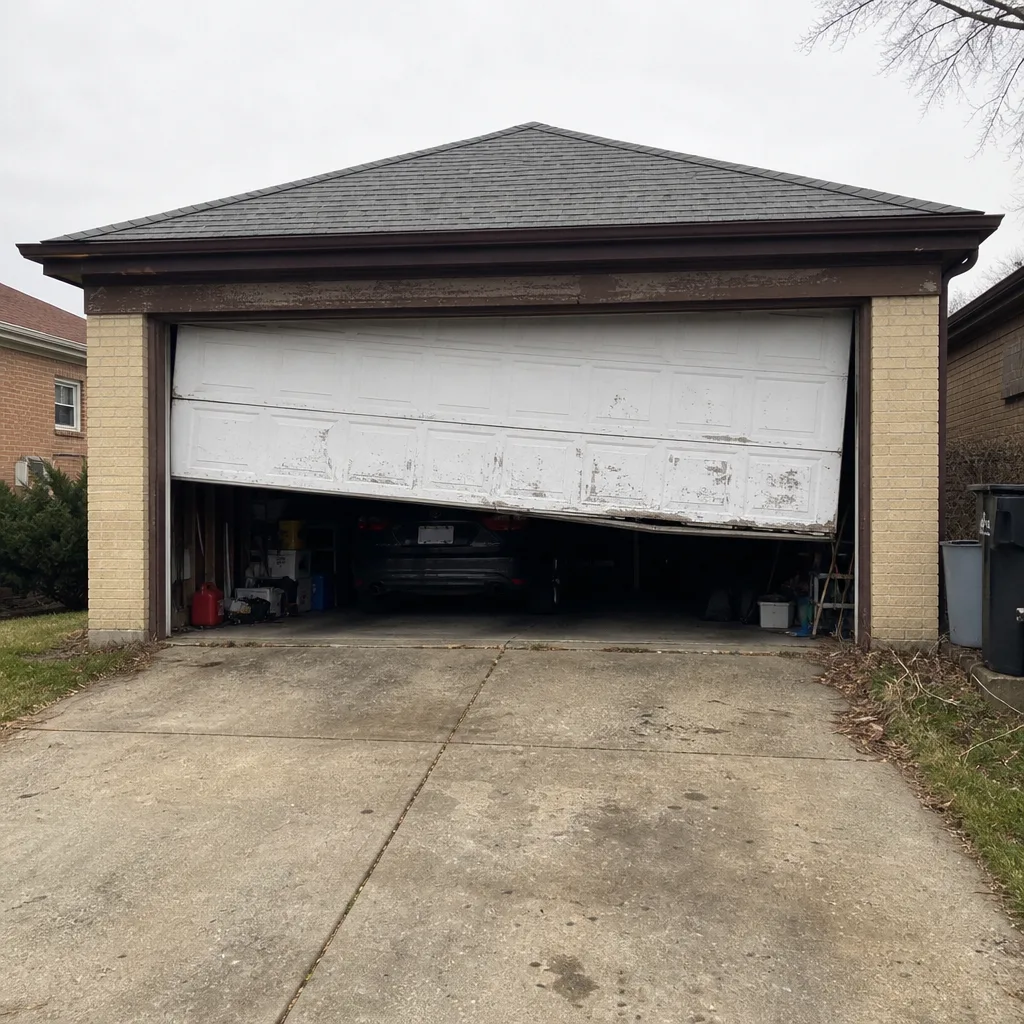 Before
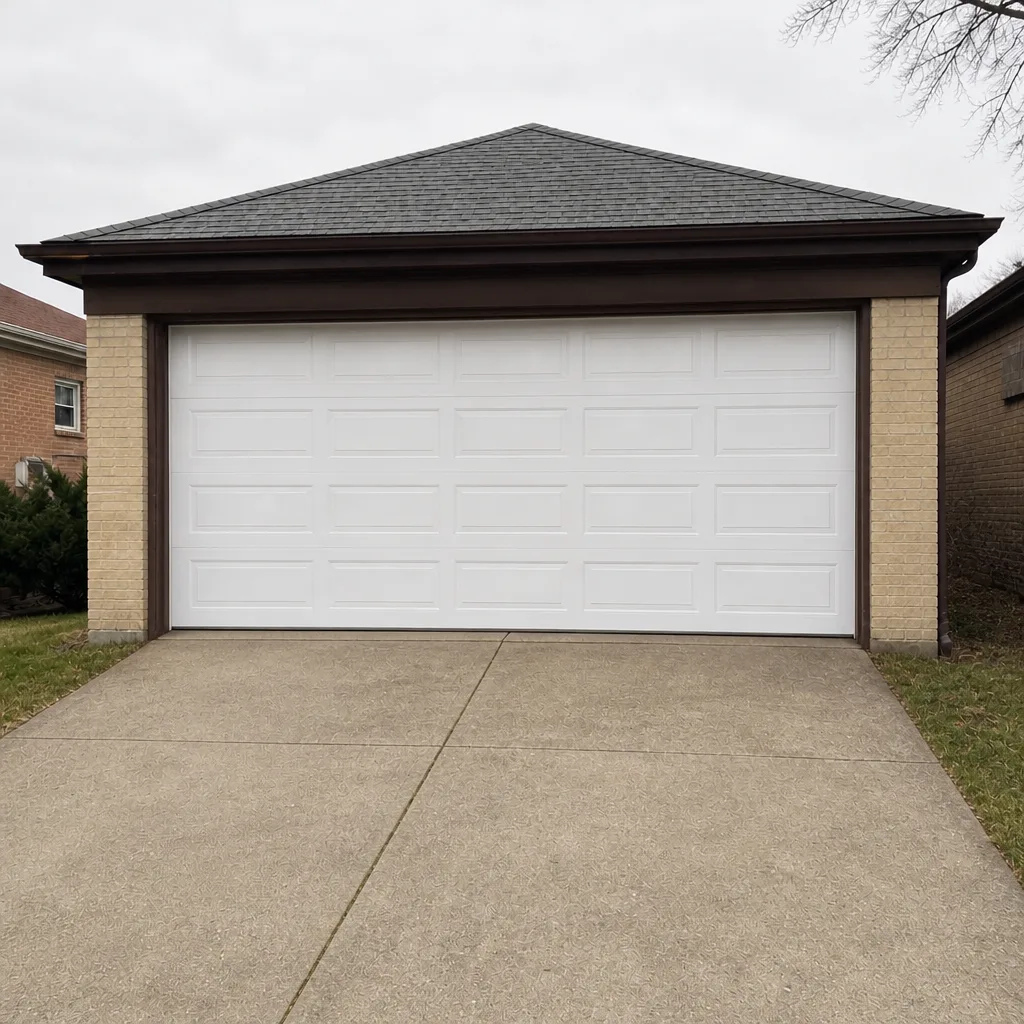 After
 Before
 After
 Before
 After
When to Call a Professional
Call a professional the moment you hear a sharp bang, see a frayed or slack cable, find the door crooked or off its track, or notice it hanging lower on one side. These are the signs where a trained technician’s judgment matters, and where waiting can turn a repair into a bigger job. If you’re unsure, the safe answer is always to have it looked at rather than to keep cycling the door to test it. Our technicians have up to 12 years of experience, we work on the major brands homeowners actually own – from LiftMaster and Chamberlain to Genie, Clopay, Amarr, and Craftsman – and we keep parts on hand so many repairs are done in one visit. Garage Door Repair Chicago Lawn offers free estimates in Chicago Lawn – call (855) 658-4150. The written estimate sets the price, and it’s agreed before any work starts.
Frequently Asked Questions
Grinding or rumbling as the door moves is the most common sign, and it usually means worn rollers or dry hinges. It’s a maintenance issue rather than an emergency, but it puts extra load on your opener and should be handled within a couple of weeks. If you’re hearing it, call (855) 658-4150 for a free estimate on replacing the rollers and tuning the door.
An uneven door usually points to a cable or drum problem rather than a spring, especially in Chicago Lawn where alley floors settle and can pull the door out of square. A cable under uneven tension stretches or slips and the door hangs low on that side. Because cables carry serious tension, keep the door down and have it checked – call (855) 658-4150.
No. A loud bang from the garage, often followed by a door that’s suddenly very heavy or won’t open, almost always means a broken spring. Stop using the door and don’t try to lift it by hand. That’s a trained-professional job – call (855) 658-4150 and we’ll get a technician out with the right tools.
Not necessarily. A door that reverses right after it starts down usually has misaligned or blocked safety sensors, or a down-limit that needs adjusting. Check that the sensors face each other and the path is clear. If it keeps reversing, it’s worth a look – call (855) 658-4150 for a free estimate.
An uneven door is more urgent than a noisy one. Noise from worn rollers or hinges is usually a two-week job. An uneven door points to a cable or track issue that can become a safety problem, so treat it as urgent and stop using the door until it’s checked. Call (855) 658-4150 if you’re not sure which you have.
No. The written estimate is the price, and it’s agreed before any work starts. We quote based on what we find during the inspection, and if something changes after we start, we talk to you before doing anything that affects the cost. Call (855) 658-4150 for a free estimate in Chicago Lawn.
The Bottom Line
Garage door warning signs are less mysterious than they seem once you match each sound and motion to the part it comes from. Grinding points to rollers, scraping to the track, a bang to the spring, and an uneven door – especially in Chicago Lawn, where alley floors settle – to the cables. Sort what you find into three buckets: stop using the door now, fix within a couple of weeks, or watch and maintain. Springs, cables, and off-track doors always belong in the first. A monthly listen-and-watch check catches most problems before they escalate. And when something looks wrong, a professional inspection is quick and the estimate is free.
If you’re seeing any of the warning signs in this guide, we can help. Call (855) 658-4150 for a free estimate in Chicago Lawn. Our technicians have up to 12 years of experience, and we work on the brands you actually own – LiftMaster, Chamberlain, Genie, Clopay, Amarr, Wayne Dalton, Craftsman, and Raynor – so the fix is built for your door, not a workaround.
Written by the team at Garage Door Repair Chicago Lawn.